




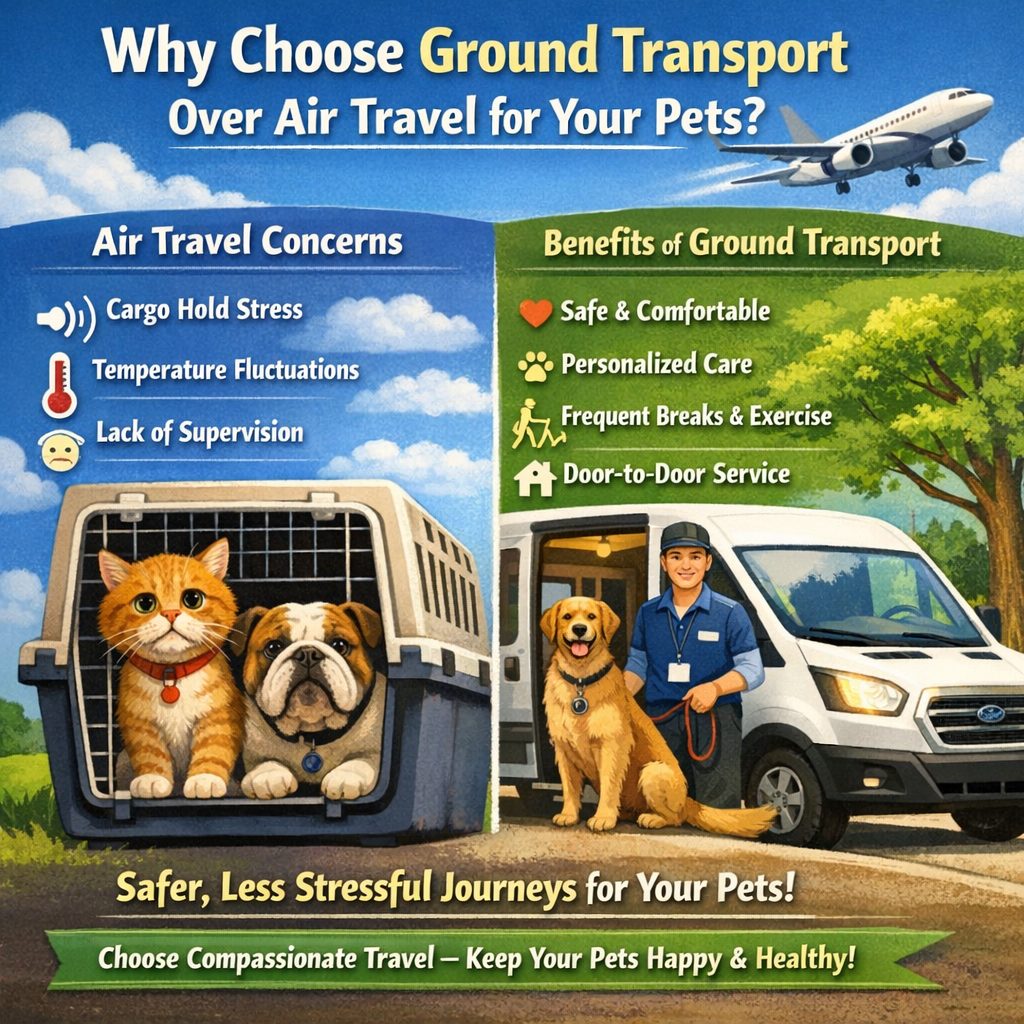
Why Choose Ground Transport Over Air Travel for Your Pets?
The decision of how to move a beloved four-legged family member across the country is rarely taken lightly. As families relocate, adopt from distant states, or travel for extended periods, the logistics of pet transportation become a central concern. For decades, air travel was the default solution for long-distance pet relocation due to its speed. However, a significant shift is occurring in the pet care industry. More pet owners are turning toward professional ground transport as a safer, more compassionate, and often more reliable alternative.
Choosing ground transport is not merely about avoiding the airport; it is about prioritizing the physiological and psychological well-being of the animal. While humans view flight as a minor inconvenience involving security lines and cramped seats, for a pet, the experience of air travel can be a confusing and terrifying ordeal. From the roar of jet engines to the isolation of a cargo hold, the stressors are numerous. Ground transport, by contrast, offers a controlled environment that mirrors the familiar experience of a car ride, providing constant supervision and a much higher level of personalized care.
The Safety and Health Advantages of Terrestrial Travel
The primary driver behind the preference for ground transport is the undeniable focus on safety. When a pet travels by air, they are often processed as “live cargo.” While airlines have protocols in place, the reality of the cargo hold involves fluctuating pressures, extreme temperature variations, and significant noise pollution.
Controlled Environments and Monitoring
One of the greatest risks in air travel is the lack of direct supervision during the flight. Once the crate is loaded into the hold, the pet is alone. In ground transport, the pet is never truly solitary. Professional drivers or pet technicians are mere feet away, capable of monitoring the animal’s breathing, behavior, and comfort levels in real time. If a pet becomes distressed or exhibits signs of a medical emergency, a ground vehicle can pull over immediately to provide assistance or seek local veterinary care.
Avoiding Brachycephalic Risks
For certain breeds, ground transport is not just a preference; it is a medical necessity. Brachycephalic breeds, such as Bulldogs, Pugs, and Persian cats, have shortened nasal passages that make them highly susceptible to respiratory distress under stress or in poorly ventilated areas. Many airlines have outright banned these breeds from cargo holds due to the high incidence of fatalities. Ground transport provides a climate-controlled, oxygen-rich environment where these sensitive animals can breathe easily and remain cool, effectively eliminating the respiratory risks associated with high-altitude travel.
Mitigation of “Cargo Anxiety”
The psychological impact of being placed in a dark, loud cargo hold cannot be overstated. Sensory overload is a leading cause of travel-induced trauma in pets. Ground transport utilizes specialized vans designed for suspension and sound dampening. The familiar sounds of a highway and the steady motion of a vehicle are far less jarring than the pressurized “pop” of an airplane cabin or the violent vibrations of takeoff and landing.
Personalized Care and Maintaining Routine
Pets thrive on routine and familiarity. The chaotic nature of airport terminals, involving being moved on luggage carts and handled by multiple strangers, disrupts a pet’s sense of security. Ground transport allows for a much more “human” approach to relocation.
Frequent Breaks and Exercise
In a cargo hold, a pet may be confined for six to twelve hours without the ability to stretch their legs or relieve themselves. This often leads to pets sitting in soiled crates, which causes skin irritation and immense distress for clean-minded animals. Ground transport schedules include mandatory stops every few hours. During these intervals, dogs are walked on leashes, allowed to play, and given fresh water. This physical activity helps burn off nervous energy, leading to a much calmer journey.
Nutrition and Hydration
Hydration is a major concern during air travel, especially for pets traveling as part of new zealand tours, as water bowls in crates often spill during turbulence or handling. In a ground vehicle, hydration is managed actively. Drivers can ensure that water is always available and that the pet is eating their regular diet at their usual times. Maintaining a consistent feeding schedule is vital for preventing gastrointestinal upset, a common side effect of travel stress.
One-on-One Interaction
Perhaps the most significant benefit is the bond formed between the driver and the pet. Many professional ground transport services offer “private” or “VIP” tiers where the driver focuses exclusively on one family’s pets. This constant companionship provides a “safe person” for the pet to look to for reassurance. Instead of being a nameless piece of freight, the pet is treated as a passenger with a name and a personality.
Logistics, Reliability, and Transparency
While air travel is technically faster, it is often plagued by logistical hurdles that do not affect ground transport. From “blackout dates” during summer heatwaves to sudden flight cancellations, air travel can be unpredictable.
Weather Independence
Airlines frequently implement temperature restrictions. If the runway temperature is too high or too low, pets are barred from flying. This can lead to last-minute cancellations that leave families stranded or forced to scramble for boarding facilities. Ground transport vehicles are equipped with sophisticated HVAC systems that maintain a steady 70 degrees Fahrenheit regardless of the weather outside. Because the environment inside the van is fully controlled, ground transport companies can operate year-round without the risk of weather-related denials.
Door-to-Door Convenience
Air travel requires the owner to drop the pet off at a specific cargo terminal, which is often located in a separate, industrial area of the airport. Upon arrival, there is another long wait for processing before the pet is released. Ground transport provides a seamless door-to-door service. The pet is picked up from the front porch of the old home and delivered directly to the doorstep of the new one. This eliminates the need for the owner to navigate airport traffic and reduces the total number of transitions the pet must endure.
Real-Time Updates
Modern ground transport services leverage technology to provide peace of mind to owners. Many vehicles are equipped with GPS tracking and onboard cameras. Owners can receive text updates, photos, and even video clips of their pets during walk breaks. This level of transparency is virtually nonexistent in the airline industry, where owners often spend the duration of the flight wondering if their pet was even loaded onto the plane.
Making the Compassionate Choice
When we weigh the options, it becomes clear that ground transport is the superior choice for those who view their pets as integral members of the family. The speed of a flight is a benefit for the human, but the comfort of the road is a gift to the pet. By choosing ground travel, you are choosing a path that respects the animal’s needs for social interaction, physical comfort, and emotional stability.
While the journey may take a few days longer, the result is a pet that arrives at their new home happy, healthy, and ready to explore, rather than one that is exhausted and traumatized by the rigors of flight. Investing in professional ground transport is an investment in your pet’s long-term health and your own peace of mind.
Ready to Schedule Your Move?
Don’t leave your pet’s safety to chance in a cargo hold. Give them the first-class road trip experience they deserve. Contact our team of professional pet relocation specialists today to receive a customized quote and learn more about our industry-leading safety protocols. Your pet’s journey home starts here.
Leave a Reply