




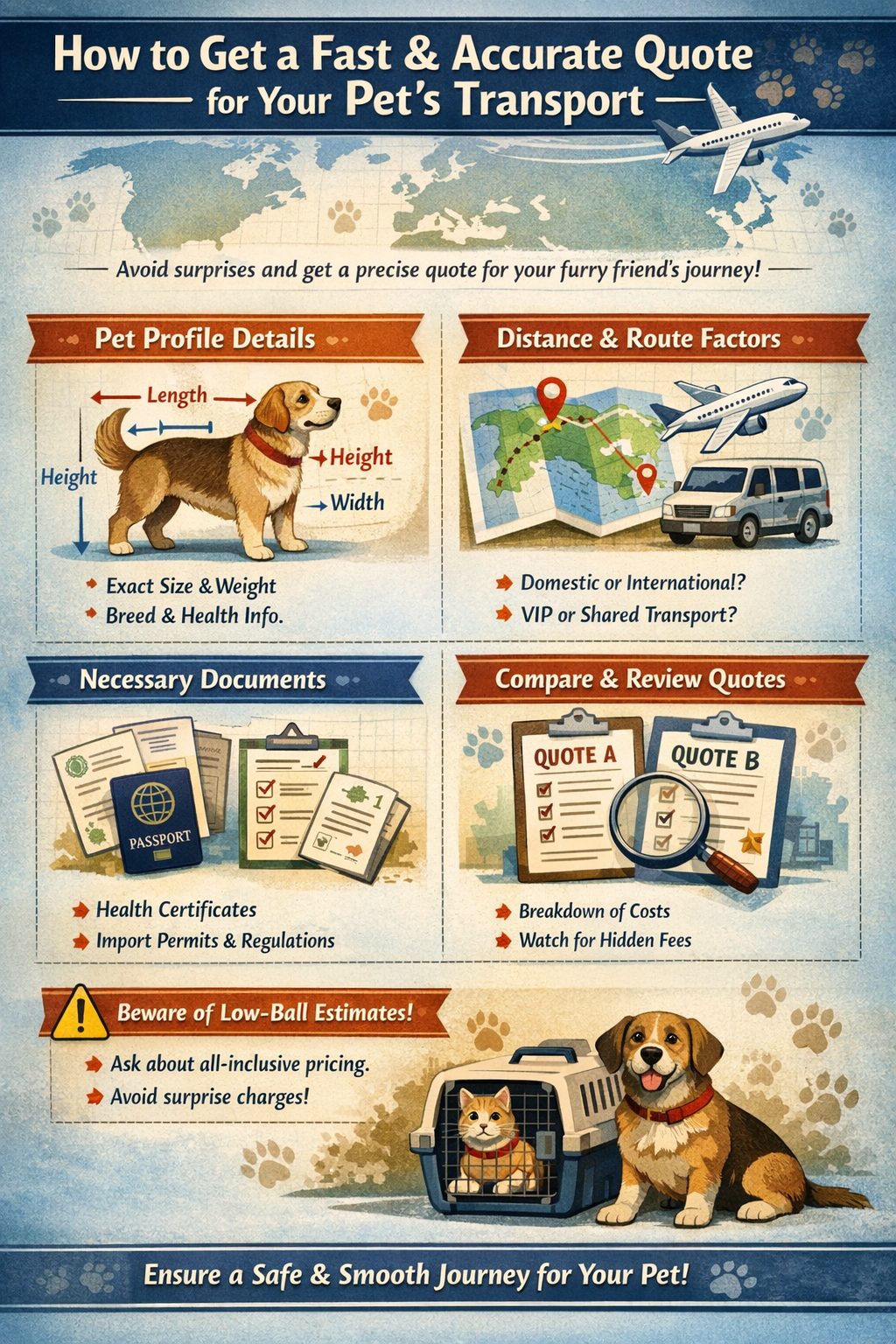
Moving a pet is rarely as simple as booking a flight for a human. Whether you are relocating for a new career, moving to a dream home overseas, or adopting a furry family member from another state, the logistics of pet transportation can be complex. One of the most significant hurdles pet owners face is obtaining a quote that is both fast and accurate.
In the shipping industry, “ballpark” figures often lead to “sticker shock” later. To avoid unexpected fees and ensure your pet’s safety, you need a quote based on precise data. This guide will walk you through the essential steps to streamline the quoting process and ensure the price you see is the price you pay.
Why Pet Transport Quotes Vary So Much
Before diving into the “how,” it is important to understand the “why.” Pet transport is not a one size fits all service. Unlike a standard package, a living animal requires climate-controlled environments, specialized handling, and adherence to strict legal regulations.
Several variables influence the final cost:
- Distance and Route: Cross-country ground transport differs significantly from international air travel.
- Species and Breed: Certain breeds, such as brachycephalic (snub-nosed) dogs or cats, require extra care or specific airline-approved crates.
- Seasonal Fluctuations: Heat holds and cold weather restrictions can limit transport windows, affecting availability and pricing.
- Regulatory Compliance: Blood tests, vaccinations, and USDA endorsements vary by destination.
By providing detailed information upfront, you help transport specialists eliminate guesswork, which is the primary cause of delayed or fluctuating quotes.
Section 1: Preparing Your Pet’s Profile for Accuracy
The foundation of an accurate quote is a detailed profile of your pet. Most owners provide the breed and a rough weight, but professional transporters need more specific data to calculate crate sizes and airline requirements.
Accurate Measurements are Non-Negotiable
A common mistake is guessing a pet’s height or length. Airlines and ground transporters have strict safety requirements regarding crate size; a pet must be able to stand, turn around, and lie down comfortably. If your measurements are off, the quote will be too.
You should measure your pet in four key areas:
- Length: From the tip of the nose to the base of the tail.
- Height: From the floor to the top of the head or ear tips (whichever is higher).
- Width: At the widest point of the shoulders.
- Leg Height: From the floor to the elbow joint.
Disclosing Medical and Behavioral Needs
Be transparent about your pet’s temperament and health. If your dog is prone to anxiety or has a history of escaping crates, the transporter needs to know. Similarly, if your pet requires daily medication, this must be factored into the service level. Disclosing these details early ensures the quote includes any necessary specialized handling fees.
Section 2: Logistics and Documentation Details
Once your pet’s physical profile is ready, the focus shifts to the “where” and “when.” Precision in logistics prevents the need for revised quotes halfway through the planning process.
Specific Locations vs. General Regions
Asking for a quote from “New York to London” is helpful, but providing specific zip codes or postal codes is better. Professional pet movers often provide door-to-door service. The distance between an airport and your final residence can add several hours of driving time, which impacts labor costs and fuel surcharges.
Understanding the Timeline
Are you looking for a “VIP” solo journey or a “Shared” transport?
- VIP/Private Transport: Your pet is the only passenger. This is faster but significantly more expensive.
- Consolidated/Shared Transport: Your pet travels with others on a set route. This is cost-effective but requires flexibility with dates.
Accuracy in your quote depends on your flexibility. If you must move on a specific Tuesday, the price may be higher than if you provide a ten-day window.
The Paperwork Factor
International travel involves a mountain of paperwork, especially when planning new zealand tours packages. If you handle the health certificates and permits yourself, the quote will be lower; however, if you want the transport company to manage the vet visits and government endorsements, ensure this is clearly requested in your initial inquiry.
Section 3: Comparing Quotes and Spotting Red Flags
Not all quotes are created equal. When you receive estimates from multiple companies, you must compare them line by line to ensure you are comparing “apples to apples.”
What Should Be Included?
A comprehensive, accurate quote should ideally break down the following:
- Airfare or Mileage: The actual cost of the transit.
- Crate Costs: If you are not providing your own IATA-compliant crate.
- Handling Fees: Charges for check-in, comfort stops, and boarding.
- Entry Permits and Customs: Essential for international moves.
- Fuel Surcharges: These can fluctuate, so ask if they are locked in.
Beware of the “Low-Ball” Estimate
If one quote is significantly lower than the others, proceed with caution. Some companies provide a base price that excludes mandatory fees like terminal handling or airport taxes. Ask the provider if the quote is “all-inclusive.” An accurate quote is transparent about what is excluded, such as potential vet fees or unexpected boarding due to weather delays.
Questions to Ask the Provider
To verify the accuracy of a quote, ask these three questions:
- “Does this price include the mandatory USDA endorsement or equivalent country-specific fees?”
- “What happens to the price if the flight is delayed or a heat hold is put in place?”
- “Are there any additional ‘hidden’ fees that might appear at the destination?”
Conclusion: Ensuring a Stress-Free Journey
Getting an accurate quote for pet transport is about more than just budgeting; it is about establishing a relationship of trust with the professionals who will be caring for your family member. By providing precise measurements, clear timelines, and specific locations, you empower transporters to give you a reliable financial roadmap.
Remember that the cheapest option is rarely the best when it comes to the safety of a living animal. Focus on transparency, clear communication, and detailed breakdowns. When you have an accurate quote in hand, you can move forward with the peace of mind that your pet’s journey will be handled with the expertise and care they deserve.
Leave a Reply